

A memory box might sound like just another way to stash old keepsakes and letters. But here’s a surprise. Studies show memory boxes can actually help improve emotional wellness and maintain a sense of identity, especially for those facing memory loss. Most people think these boxes are only sentimental, tucked away in bedrooms or closets. Yet they are becoming powerful tools in homes, classrooms, and even offices, turning everyday objects into creative displays and team-building resources. You might be amazed at how one small box can unlock stories, spark connection, and even boost your well-being.
Table of Contents
- Defining What A Memory Box Is
- Benefits Of Memory Boxes For Homes And Businesses
- Creative Memory Box Ideas For Decor And Organization
- Tips To Start And Personalize Your Memory Box
Quick Summary
| Takeaway | Explanation |
|---|---|
| Memory boxes preserve personal stories. | They contain curated items that represent significant experiences, emotions, and connections throughout life. |
| They foster emotional wellness and connection. | Curating and sharing memories can enhance emotional wellbeing and bridge generations within families. |
| Memory boxes serve educational purposes. | They can be tools for learning, helping individuals analyze personal artifacts and understand historical contexts. |
| Practical organization enhances memory box utility. | Implementing categorization techniques like chronological sorting improves the management and accessibility of your memory box. |
| Personalization makes memory boxes unique. | Custom designs and engaging crafting techniques transform memory boxes into artistic expressions that reflect individual stories. |
Defining What a Memory Box Is
A memory box represents more than just a container. It is a carefully curated collection of personal artifacts, photographs, documents, and mementos that capture significant moments, emotions, and experiences from an individual’s life journey. These thoughtfully assembled collections serve as powerful tools for preserving personal history, triggering memories, and connecting generations.
The Essence of Personal Storytelling
At its core, a memory box is a deeply personal archive that tells a unique narrative. Unlike generic storage solutions, these boxes are intentional collections that reflect an individual’s most cherished memories and life experiences. According to Sesame Workshop, memory boxes can be particularly therapeutic for children processing complex emotions, such as grief or significant life transitions.
The contents of a memory box are as diverse as the individuals who create them. They might include childhood drawings, ticket stubs from memorable events, handwritten letters, small trinkets, pressed flowers, or family heirlooms. Each item serves as a tangible connection to a specific moment or person, preserving memories that might otherwise fade with time.
Therapeutic and Educational Applications
Beyond personal nostalgia, memory boxes have significant applications in therapeutic and educational settings. University of Delaware’s educational resources highlight how these collections can be powerful educational tools. By analyzing artifacts and personal documents, students can develop a deeper understanding of history and build intergenerational connections.
In clinical settings, memory boxes serve crucial psychological functions. For individuals experiencing memory loss or dementia, these carefully curated collections can help stimulate cognitive recall and provide emotional comfort. Research from Wikipedia indicates that memory boxes are often used in therapeutic contexts to help individuals reconnect with their personal history and maintain a sense of identity.
The process of creating a memory box is itself a meaningful experience. It requires reflection, selection, and intentionality. Individuals must decide which memories are most significant, which items best represent those memories, and how to arrange them in a way that tells a coherent story. This act of curation is a form of personal archiving, transforming ephemeral experiences into lasting, touchable memories.
Whether used for personal reflection, family heritage preservation, therapeutic support, or educational exploration, memory boxes represent a profound method of storytelling. They are not just containers of objects but living archives of human experience, emotion, and connection.
Benefits of Memory Boxes for Homes and Businesses
Memory boxes are not merely sentimental storage solutions but powerful tools that offer profound benefits for both personal and professional environments. By preserving memories, fostering emotional connections, and supporting cognitive health, these curated collections can transform how individuals and organizations approach documentation, storytelling, and personal development.
Emotional Wellness and Personal Connection
In personal settings, memory boxes provide significant psychological benefits. Research from the National Center for Biotechnology Information demonstrates that preserving personal artifacts can enhance emotional wellbeing and maintain a sense of identity, particularly for individuals experiencing memory challenges.
For families, memory boxes become intergenerational bridges. They allow children to connect with family history, understand their roots, and develop a deeper appreciation for their heritage. Parents and grandparents can use these collections to share personal stories, creating meaningful conversations that transcend generational gaps. These boxes become living narratives that communicate family values, experiences, and personal journeys.
Professional and Business Applications
Businesses can leverage memory boxes as innovative tools for team building, brand storytelling, and organizational memory preservation. Companies can create corporate memory boxes that document their evolution, milestone achievements, and cultural transformation. These collections can serve multiple purposes such as:
- Onboarding Enhancement: New employees can gain insights into company history and culture
- Brand Storytelling: Documenting company journey and significant moments
- Knowledge Preservation: Capturing institutional knowledge from long-term employees
Startups and established organizations alike can benefit from this approach. By carefully archiving significant documents, photographs, early product prototypes, and testimonials, businesses create tangible representations of their growth and achievements.

Cognitive Health and Personal Development
Memory boxes extend beyond mere nostalgia. They play a crucial role in cognitive stimulation and personal development. For individuals experiencing memory-related challenges or seeking personal growth, these collections offer structured opportunities for reflection and reminiscence.
Therapeutic professionals often recommend memory box creation as a method for processing life transitions, grief, or personal transformation. By selecting and organizing meaningful items, individuals engage in a reflective process that supports emotional processing and self-understanding.
Moreover, memory boxes can serve educational purposes. They become interactive learning tools that help individuals explore personal narratives, understand historical contexts, and develop stronger communication skills. The act of curating these collections encourages critical thinking, emotional intelligence, and creative expression.
Whether used in homes or professional environments, memory boxes represent more than simple storage solutions. They are dynamic, living archives that capture human experiences, emotions, and personal journeys. By intentionally preserving memories, individuals and organizations can create powerful narratives that connect past, present, and future.
Creative Memory Box Ideas for Decor and Organization
Memory boxes are far more than simple storage containers. They represent an artistic opportunity to blend personal storytelling, functional organization, and home decor. By reimagining traditional memory preservation techniques, individuals can create stunning displays that not only protect cherished memories but also enhance living spaces.
Innovative Design and Display Strategies
Modern memory boxes transcend conventional wooden containers. Designers and homeowners are exploring creative approaches that transform memory preservation into an art form. Martha Stewart Living suggests using transparent glass cases, shadow boxes, and multi-compartment display units that allow for dynamic and visually engaging memory presentations.
These design innovations enable multiple display options. Some memory boxes can be mounted on walls like artwork, creating visual narratives that invite conversation and reflection. Others integrate seamlessly into existing furniture, such as coffee table compartments or built-in shelving units that maintain a sleek, uncluttered aesthetic while preserving personal artifacts.
Functional Organization Techniques
Organizing memory boxes requires strategic thinking. Categorization becomes key to creating meaningful collections. Professional organizers recommend several approaches:
Below is a table summarizing common organization techniques for memory boxes, making it easy to see different methods and how they help keep your collection meaningful and accessible.
| Organization Technique | Description | Example Application |
|---|---|---|
| Chronological Sorting | Arrange items by date or life stage | Childhood, college, career, etc. |
| Thematic Grouping | Group by event, relationship, or theme | Weddings, holidays, friendships |
| Color Coding | Use color dividers/containers for categories | Blue: travel, Green: family |
| Digital Integration | Combine physical and digital archiving | Scanning photos for backup/sharing |
- Chronological Sorting: Arranging items by specific time periods or life stages
- Thematic Grouping: Organizing memories around specific events or relationships
- Color Coding: Using color-coded containers or dividers for easy identification
Digital integration offers another innovative organizational strategy. The Container Store recommends combining physical memory boxes with digital archiving. This approach allows individuals to create digital backups of photographs and documents while preserving original artifacts, ensuring comprehensive memory preservation.
Personalization and Crafting Techniques
Personalization transforms memory boxes from simple storage solutions into unique artistic expressions. Custom engraving, hand-painting, and decorative techniques enable individuals to create memory boxes that reflect personal aesthetics and emotional significance.
For those interested in DIY approaches, crafting memory boxes becomes a creative journey. Woodworking enthusiasts can design custom boxes with intricate details. Scrapbooking techniques can be applied to box exteriors, creating layered, textured surfaces that tell stories before the box is even opened.
Business professionals and home decorators alike can use memory boxes as sophisticated organizational tools. A well-designed memory box can serve multiple functions: preserving personal history, adding decorative flair, and maintaining organized storage. Whether displayed prominently in a living room or tucked discreetly in a home office, these carefully curated collections become more than mere containers.
The art of creating memory boxes lies in balancing aesthetic appeal with emotional authenticity. By approaching memory preservation as a design challenge, individuals can develop storage solutions that are simultaneously functional, beautiful, and deeply personal. Each box becomes a unique narrative vessel, capturing life’s most treasured moments with creativity and intention.
Tips to Start and Personalize Your Memory Box
Creating a memory box is a deeply personal journey that requires thoughtful planning, intentional selection, and creative approach. Whether you are preserving family history, documenting personal achievements, or capturing life’s most meaningful moments, developing a strategic method can transform this process from a simple storage task into a meaningful emotional experience.
Selecting the Right Container
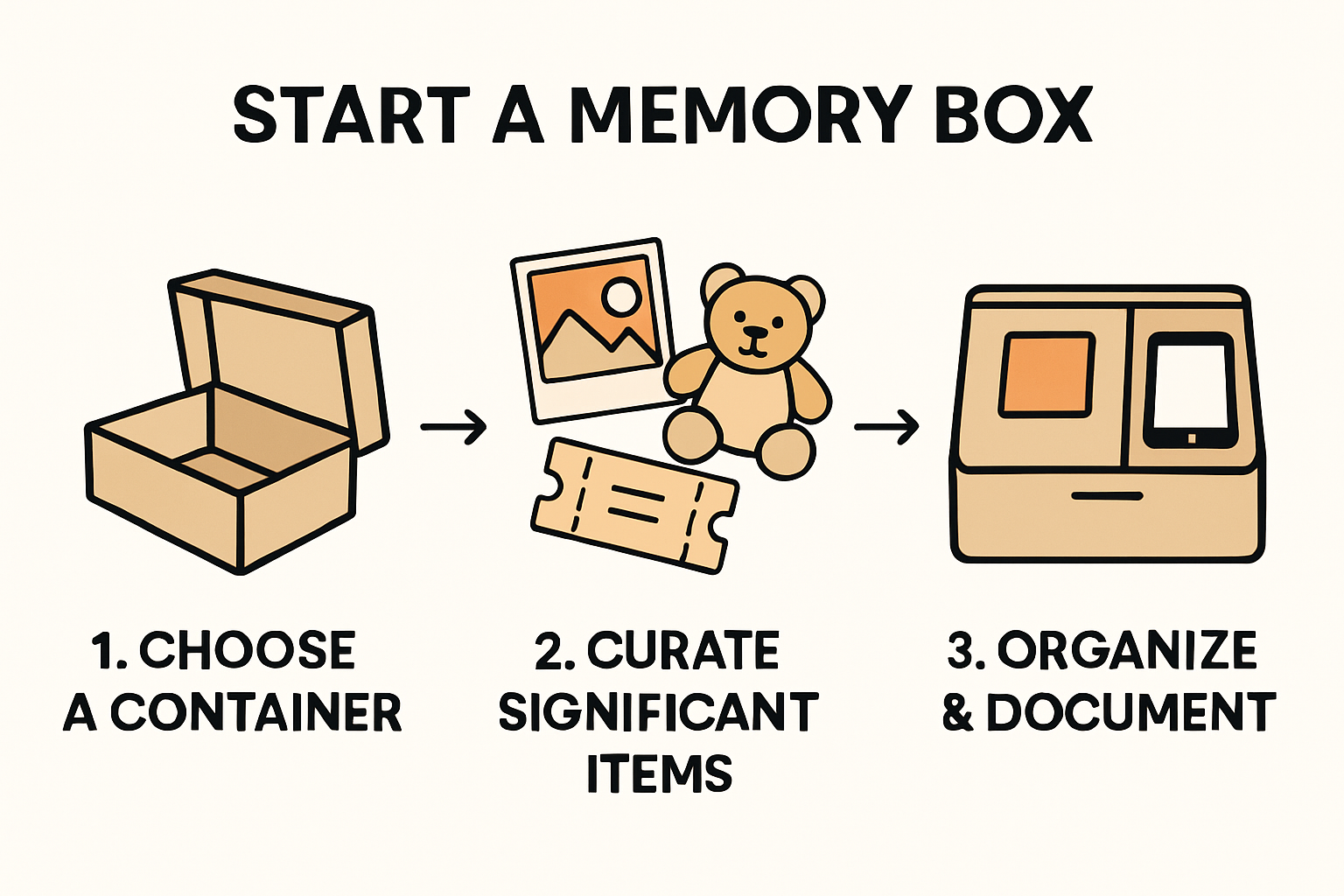
Choosing the appropriate container is the foundational step in creating a memory box. Martha Stewart Living recommends considering several key factors when selecting your memory box. The container should not only protect your items but also reflect your personal style and the collection’s purpose.
Consider containers with specific features like acid-free materials, tight-fitting lids, and protection from moisture and light. Wood, archival-quality cardboard, metal, and specialized plastic containers each offer unique advantages. Wooden boxes provide classic aesthetic appeal, while archival boxes ensure long-term preservation of delicate items.
To help you choose the best container for your memory box, here’s a comparison of the different types of containers mentioned, including their unique features and benefits.
| Container Type | Key Features | Benefit |
|---|---|---|
| Wooden Box | Classic aesthetic appeal, sturdy | Stylish, durable for display |
| Archival-Quality Cardboard | Acid-free material, protects from light/moisture | Long-term preservation of delicate items |
| Metal Box | Durable, protective against environmental factors | Extra protection for important contents |
| Specialized Plastic | Moisture-resistant, sometimes acid-free | Ideal for items prone to humidity |
Curating Meaningful Content
The heart of a memory box lies in its contents. Thoughtful curation requires more than randomly collecting items. The National Archives suggests focusing on items that tell a comprehensive story and represent significant life moments.
When selecting items, consider these guidelines:
- Emotional Significance: Choose items that trigger strong memories or feelings
- Preservation Quality: Select objects that can withstand long-term storage
- Narrative Completeness: Include items that collectively represent a broader life story
Typical memory box contents might include:
- Photographs
- Handwritten letters
- Ticket stubs
- Small personal artifacts
- Newspaper clippings
- Awards and certificates
Organization and Maintenance Strategies
Effective memory box management goes beyond initial creation. Regular maintenance and strategic organization ensure your collection remains meaningful and well-preserved. Consider implementing a systematic approach to cataloging and protecting your items.
Digital documentation can complement physical preservation. Create a digital inventory or take photographs of items, providing an additional layer of memory preservation. This approach not only creates a backup but also allows for easy sharing with family members.
Labeling is crucial. Use acid-free tags or gentle adhesive labels to identify items, providing context for future generations. Include dates, names, and brief descriptions that offer insight into each artifact’s significance.
Consider environmental factors in storage. Keep your memory box in a cool, dry place away from direct sunlight. Use silica gel packets to control moisture and prevent potential damage to delicate items.
Personalizing a memory box is an ongoing process. Allow your collection to evolve, adding new items and occasionally reviewing existing contents. This dynamic approach keeps the memory box a living, breathing representation of your personal history.
Ultimately, a memory box is more than a storage solution. It is a carefully curated narrative of personal experiences, emotions, and connections. By approaching its creation with intention, creativity, and care, you transform a simple container into a powerful storytelling tool that preserves and honors your unique life journey.
Frequently Asked Questions
What is a memory box?
A memory box is a curated collection of personal artifacts, photographs, and mementos that preserve significant moments, emotions, and experiences in an individual’s life. It serves as a powerful storytelling tool that reflects personal history.
How can a memory box improve emotional wellness?
Memory boxes can enhance emotional wellness by providing a tangible way to connect with cherished memories, fostering personal reflection, and creating opportunities for intergenerational discussions. They can also help individuals facing memory challenges maintain a sense of identity.
What are some creative ideas for organizing a memory box?
Organizing a memory box can be enhanced by categorizing items chronologically, thematically, or using color coding. Incorporating digital elements, like photographs or scanning documents, can also provide a structured and accessible memory archive.
Can memory boxes be used in a professional setting?
Yes, memory boxes can be utilized in professional environments for team building, brand storytelling, and preserving organizational knowledge. They can document a company’s evolution and culture, helping new employees connect with the organization’s history.
Transform Your Memories Into Works of Art With CustomCraft UA
Have you ever found yourself longing for a memory box that truly captures your unique story, but struggled to find a container that feels personal and lasting? This article reveals how powerful a thoughtfully designed memory box can be for your emotional wellness, family connection, or business culture. At CustomCraft UA, we help you transform meaningful objects and treasured moments into custom-crafted display pieces that tell your story vividly and beautifully.
Take the next step and move from inspiration to creation. Whether you want a personalized keepsake, a professional memory archive, or a functional organizer that stands the test of time, our artisans blend traditional woodworking with cutting-edge technology to bring your vision to life. Discover how a custom memory box can become the heart of your home or business. Start your project with the CustomCraft UA team today and create something that lasts for generations.


