

Wood engraving might sound like old-school craftsmanship, but it’s quietly taking over modern homes in a big way. Believe it or not, custom-engraved pieces can increase a home’s perceived style value by up to 30 percent according to interior designers. Instead of sticking to paint or wallpaper, more people are using engraved wood to tell their stories right on their walls and shelves.
Table of Contents
- Understanding Essential Wood Engraving Techniques
- Tools And Materials For Beginners And Small Businesses
- Creative Ideas For Home Decor And Kitchen Organizing
- Tips For Success With Wood Engraving Projects
Quick Summary
| Takeaway | Explanation |
|---|---|
| Choose the right wood for engraving | Hardwoods like maple and cherry provide the best surfaces for detailed wood engraving work. |
| Invest in quality tools | Precision tools such as gravers and sharpening stones are essential for achieving excellent engraving results. |
| Design preparation is crucial | Thorough project planning, including sketches and tool organization, ensures successful engraving. |
| Practice consistently to refine skills | Regular practice on scrap wood helps develop better control and technique, leading to improved artistry. |
| Balance art with functionality | Engraved items should serve a practical purpose while also enhancing aesthetic appeal in home decor. |
Understanding Essential Wood Engraving Techniques
Wood engraving transforms ordinary wooden surfaces into extraordinary artistic expressions, blending traditional craftsmanship with precision techniques. This intricate art form requires understanding specific methods, tools, and approaches that elevate wooden pieces from simple surfaces to stunning decorative elements.
The Fundamentals of Wood Engraving
Wood engraving is a specialized printmaking technique that involves meticulously carving designs into the end grain of hardwood blocks. Unlike traditional woodcarving, this method demands extraordinary precision and control. Artists use specialized tools to create intricate, detailed images by carefully removing tiny wood sections, resulting in delicate and sophisticated designs.
The process begins with selecting the right wood. Hardwoods like boxwood, maple, and cherry provide the ideal surface for detailed engravings. These woods offer a dense, tight grain structure that allows for extremely fine lines and complex patterns. Professional artisans understand that wood selection is crucial - softer woods simply cannot support the intricate details wood engraving demands.
Essential Tools and Techniques
Professional wood engravers rely on specific tools to achieve remarkable results. The primary instruments include:
- Gravers: Precision cutting tools designed for controlled, detailed carving
- Spitstickers: Specialized for creating intricate curved lines and subtle details
- Scorpers: Used for removing larger wood areas and creating broader design elements
Mastering these tools requires significant practice and understanding of wood grain direction. Experienced artisans develop an intuitive sense of how different wood types respond to various cutting techniques. They learn to work with the wood’s natural characteristics, using gentle pressure and strategic movements to create designs that appear almost impossibly delicate.
Developing Artistic Precision
Successful wood engraving goes beyond technical skill - it demands artistic vision. Artists must conceptualize designs that work harmoniously with wood’s natural texture and grain patterns. This means understanding how light and shadow will interact with the engraved surface, creating depth and visual complexity.
Beginners often start with simple geometric patterns or basic botanical designs. As skills develop, they progress to more complex imagery, incorporating multiple layers of detail and sophisticated shading techniques. The most impressive wood engravings tell visual stories through meticulously crafted lines and carefully considered negative spaces.
Wood engraving is not just a technique but a profound artistic dialogue between the creator, their tools, and the natural material. Each piece represents hours of patient work, transforming raw wood into a canvas that captures imagination and skill in its most refined form.
Tools and Materials for Beginners and Small Businesses
Venturing into wood engraving requires strategic investment in quality tools and materials that balance craftsmanship with cost-effectiveness. Small businesses and aspiring artisans must carefully select equipment that enables precision while maintaining economic feasibility.
Essential Equipment Investment
According to the USDA Forest Service research, understanding wood characteristics is fundamental to successful engraving projects. Professional-grade wood engraving necessitates a thoughtful collection of tools that support intricate design work.
Core equipment for beginners includes:
- Gravers: Precision cutting instruments ranging from $50-$200
- Sharpening Stones: Critical for maintaining tool edges ($30-$100)
- Magnifying Glasses/Loupes: Essential for detailed work ($25-$150)
- Safety Equipment: Protective gloves and eyewear ($20-$50)
Initial investment typically ranges between $300-$700, depending on tool quality and brand selection. Budget-conscious entrepreneurs can start with mid-range tools and gradually upgrade as skills improve.
Wood Selection Strategies
Wood selection significantly impacts engraving quality, with certain species offering superior performance. Recommended woods for beginners include:
- Maple: Smooth grain, excellent for detailed work
- Cherry: Moderate hardness, beautiful natural color
- Basswood: Softer option, more forgiving for novices
- Birch: Consistent grain, affordable pricing
Professional artisans recommend purchasing wood from specialized lumber suppliers who understand woodworking requirements. Typically, high-quality engraving wood costs $10-$50 per board foot, with prices varying based on wood type and quality.
To help beginners and small businesses choose the appropriate wood for engraving, the table below summarizes the characteristics of recommended wood types mentioned in the article.
| Wood Type | Grain & Hardness | Best For | Price Range (per board foot) |
|---|---|---|---|
| Maple | Smooth grain, hard | Detailed work | $10 - $50 |
| Cherry | Moderate hardness, rich color | Intermediate projects | $10 - $50 |
| Basswood | Softer, gentle grain | Beginners, easy carving | $10 - $50 |
| Birch | Consistent grain, moderate hard | Budget-friendly projects | $10 - $50 |
Developing a Cost-Effective Workflow
Successful small businesses optimize their wood engraving processes by implementing strategic practices. This includes careful tool maintenance, bulk material purchasing, and continuous skill development. Investing in quality tools upfront reduces long-term replacement costs and minimizes project interruptions.
Beginners should allocate approximately 20% of their initial budget for ongoing education through workshops, online courses, and practice materials. Learning efficient techniques reduces material waste and improves overall project profitability.
Establishing relationships with local woodworking suppliers can provide additional benefits like bulk discounts, material recommendations, and potential collaborative opportunities. Small businesses that approach wood engraving as both an art and a strategic business venture position themselves for sustainable growth and creative excellence.
Creative Ideas for Home Decor and Kitchen Organizing
Wood engraving offers an extraordinary opportunity to transform ordinary kitchen and home spaces into personalized, functional art pieces. By combining technical skill with creative design, artisans can craft unique organizational solutions and decorative elements that blend utility with aesthetic appeal.
Innovative Kitchen Storage Solutions
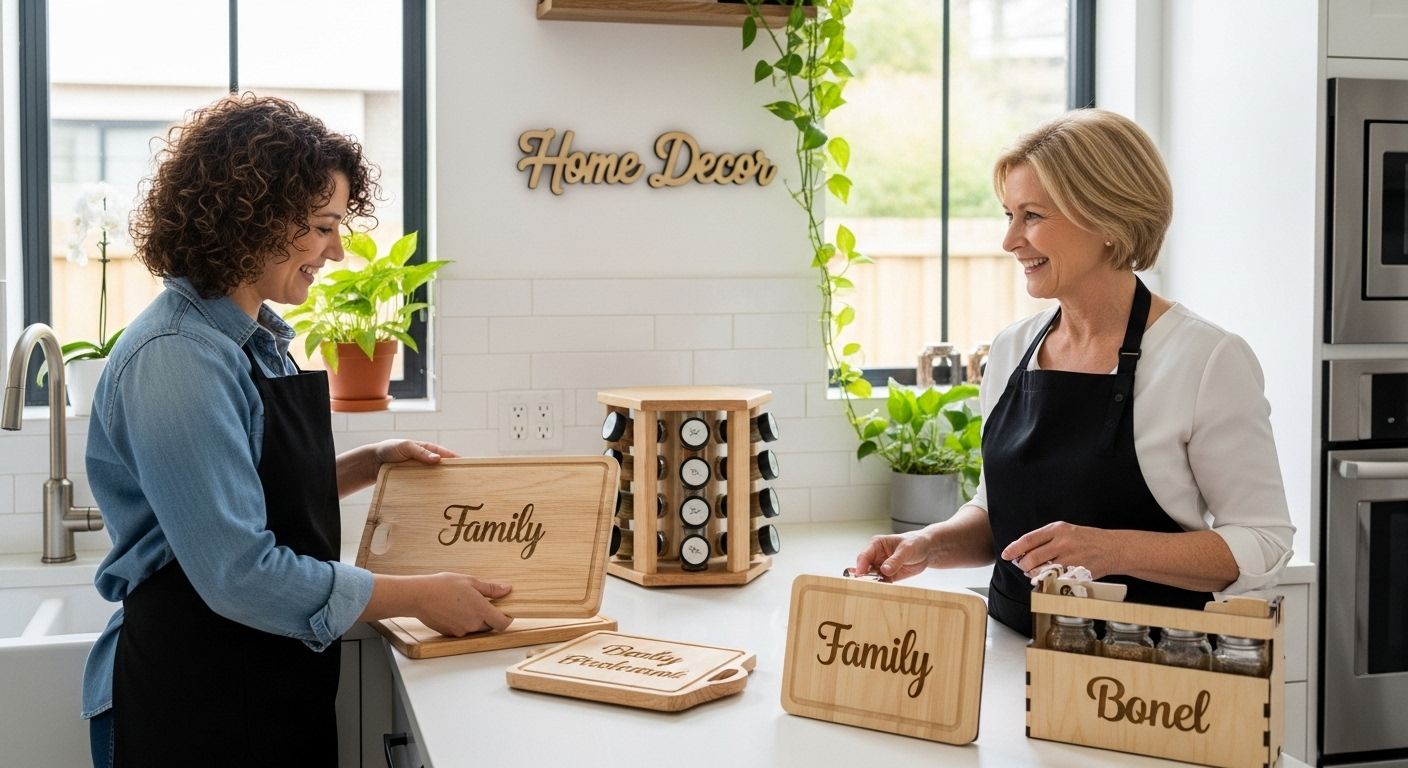
According to interior design experts, custom wood engraved items can revolutionize kitchen storage and organization. Wooden recipe card boxes, spice organizers, and utensil holders become more than simple storage - they become statement pieces that reflect personal style and craftsmanship.
Consider creating multi-functional pieces like:
- Personalized Cutting Boards: Engraved with family names or meaningful quotes
- Utensil Organizers: Precision-carved wooden holders with intricate design details
- Spice Rack Systems: Modular wooden racks with engraved labels for precise organization
These custom pieces not only solve practical storage challenges but also add a unique artistic touch to kitchen spaces. The key is designing items that are both functional and visually compelling.
Decorative Home Accent Techniques
Interior design trends increasingly emphasize personalized home decor, and wood engraving provides an exceptional avenue for creating unique accent pieces. Wall hangings, picture frames, and decorative trays can be transformed from ordinary objects into extraordinary artistic expressions.
Creative approaches include:
- Geometric Wall Art: Intricate wood panels with precisely carved geometric patterns
- Personalized Memory Boxes: Wooden boxes engraved with family tree designs or significant dates
- Decorative Serving Trays: Elegant wooden surfaces featuring custom landscape or abstract designs
The versatility of wood engraving allows for incredible customization, enabling individuals to create pieces that perfectly match their interior design aesthetic and personal narrative.
Functional Design for Modern Spaces
Successful wood engraving for home decor requires a delicate balance between artistic expression and practical functionality. Designers must consider factors like wood durability, finish quality, and overall usability when creating decorative pieces.
Key considerations include:
- Selecting wood types that withstand frequent use
- Applying protective finishes that maintain design integrity
- Creating designs that complement existing home decor styles
- Ensuring practical dimensions and ergonomic functionality
Professional artisans understand that true design excellence emerges when beauty meets utility. Wood engraving offers an unparalleled opportunity to create home decor items that are simultaneously functional tools and artistic statements.
By approaching wood engraving as a holistic design process, creators can develop pieces that transform living spaces. Each engraved item tells a story, represents personal creativity, and adds a layer of sophisticated craftsmanship to everyday environments.
Tips for Success with Wood Engraving Projects
Successful wood engraving requires more than technical skill - it demands a strategic approach that combines preparation, technique, and continuous learning. Mastering this craft involves understanding nuanced practices that transform good projects into exceptional artistic expressions.
Design and Preparation Strategies
Professional wood engraving experts recommend thorough project planning as the foundation of successful work. Before touching a single tool, artists must develop a comprehensive design strategy that considers multiple critical factors.
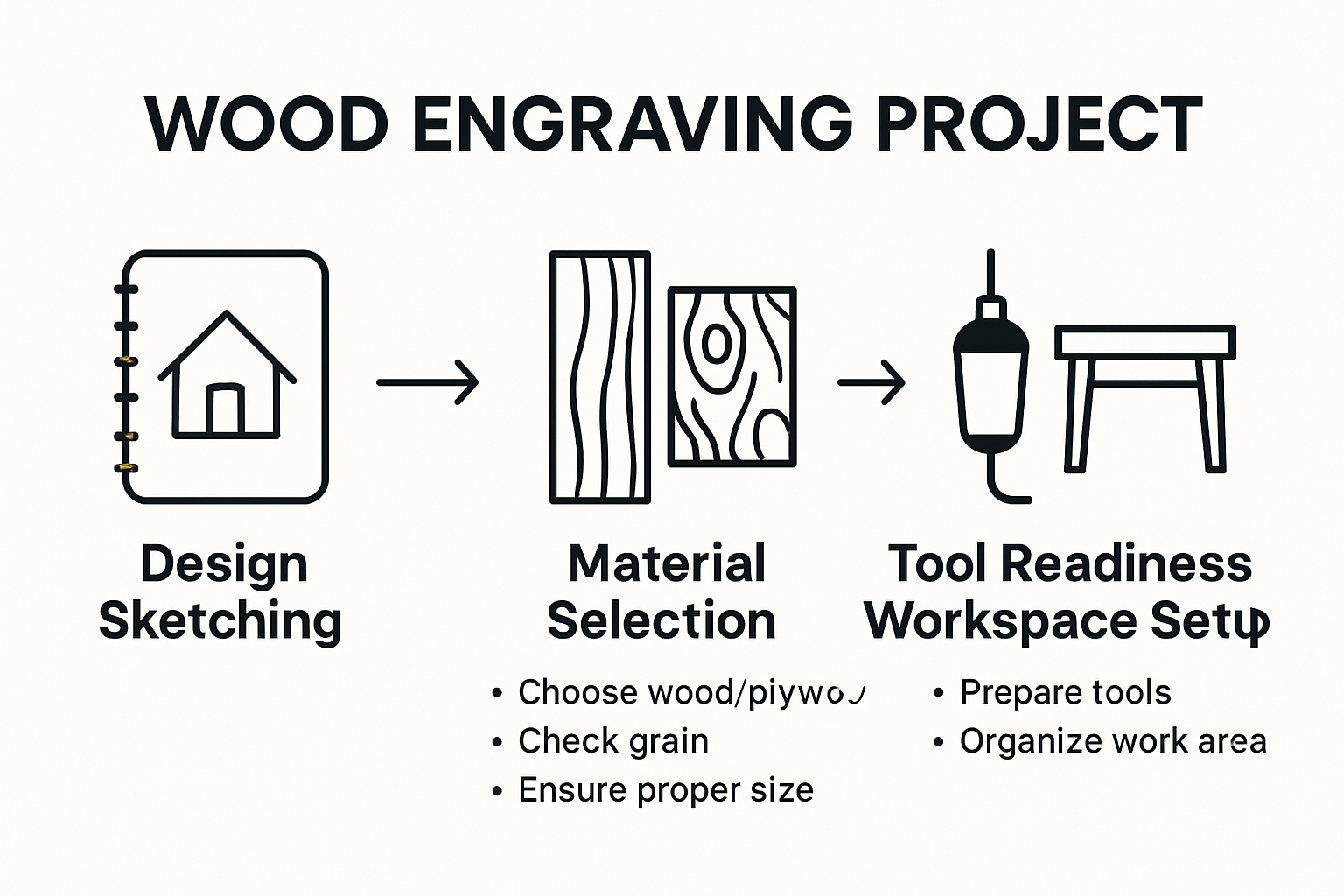
Key preparation steps include:
The following table summarizes essential preparation steps to ensure successful wood engraving projects, as described in the design and preparation strategies section.
| Preparation Step | Purpose |
|---|---|
| Design Sketching | Create detailed preliminary drawings |
| Material Selection | Choose wood with consistent grain |
| Tool Readiness | Sharpen and organize engraving tools |
| Workspace Setup | Ensure proper lighting and comfort |
| Design Transfer | Use carbon paper/transfer sheet for accuracy |
- Design Sketching: Create detailed preliminary drawings
- Material Selection: Choose appropriate wood with consistent grain
- Tool Readiness: Ensure all tools are sharpened and organized
- Workspace Setup: Establish proper lighting and comfortable work environment
Transferring designs accurately onto wood surfaces requires precision. Techniques like carbon paper tracing or using transfer sheets help maintain design integrity and reduce potential errors during the engraving process.
Technique Refinement and Practice
According to woodworking skill development resources, consistent practice represents the most effective path to mastery. Beginners should invest significant time practicing on scrap wood, experimenting with different pressures, angles, and cutting techniques.
Critical technique development areas include:
- Understanding tool angle variations
- Controlling cutting depth consistently
- Developing steady hand movements
- Learning how different wood grains respond to various tools
Professional artisans recommend dedicating at least 10-15 hours of focused practice before attempting complex commissioned projects. This approach helps build muscle memory and intuitive understanding of wood engraving dynamics.
Advanced Project Management
Detailed wood engraving techniques emphasize comprehensive project management, which goes beyond simple technical execution. Successful projects require strategic planning, risk management, and continuous skill refinement.
Advanced strategies include:
- Using power tools like rotary tools for precise detailing
- Implementing safety protocols during work
- Developing consistent quality control processes
- Creating backup designs and alternative approaches
Professional wood engravers understand that each project presents unique challenges. Flexibility, patience, and willingness to adapt become as important as technical proficiency. Learning from mistakes and continuously expanding technical skills distinguishes exceptional artisans from average practitioners.
Ultimately, wood engraving is a journey of continuous improvement. By embracing a growth mindset, maintaining disciplined practice, and approaching each project with creativity and technical precision, artists can transform simple wooden surfaces into extraordinary works of art.
Frequently Asked Questions
What types of wood are best for engraving?
Hardwoods like maple, cherry, and boxwood are ideal for engraving due to their dense, tight grain structure that allows for fine details and complex patterns.
What tools are essential for wood engraving?
Essential tools include gravers for detailed carving, spitstickers for intricate lines, and scorpers for larger areas. These tools help achieve precision and control in your engraving projects.
How can I develop artistic precision in wood engraving?
Developing artistic precision involves thorough design preparation, consistent practice on scrap wood, and mastering the techniques of light and shadow interaction on engraved surfaces.
What tips can help ensure successful wood engraving projects?
Key tips include planning your design thoroughly, ensuring your tools are well-maintained and sharp, using appropriate wood, and establishing a comfortable workspace with good lighting.
Bring Your Wood Engraving Dreams to Life with CustomCraft UA
Struggling to turn your wood engraving skills into a statement piece for your home? Precision tools and time can only do so much when you want a truly show-stopping result. Many readers of “Wood Engraving Techniques for Stylish Home Decor” face challenges like finding the right wood, achieving intricate designs, and crafting pieces that both organize and beautify their living spaces. At CustomCraft UA, we blend your vision with expert craftsmanship, offering personalized products that solve those exact pain points. Whether you want bespoke recipe boxes, unique wall art, or functional decorative accents, our approach merges traditional artistry with advanced laser tech for stunning, lasting results.

Ready to elevate your home with one-of-a-kind engraved pieces? Start your journey with CustomCraft UA, where every item tells your story. Share your ideas with our talented team, explore endless possibilities for customization, and let us transform your home into a showcase of skillful design. Now is the perfect time to bring your creative goals to reality—discover how we can craft something special, just for you, at https://customcraftua.com.


