

Building your own display stand might sound complicated, but this simple project can totally change how your space looks and works. Most people just buy standard shelves or stands without second thought. Yet anyone can create a custom display stand that fits their exact needs, and here is the best part. A well-placed display stand can increase product visibility in retail spaces by up to 40 percent. That means every corner of your home or business can work harder for you with just a little hands-on effort.
Table of Contents
- Choosing The Right Materials For Your Display Stand
- Step-By-Step Guide To Building A Sturdy Stand
- Creative Design Ideas For Businesses And Homes
- Tips For Displaying Products And Organizing Spaces
Quick Summary
| Takeaway | Explanation |
|---|---|
| Choose the right materials carefully. | The material influences durability and aesthetics. Consider factors like weight, location, and environmental conditions for optimal performance. |
| Plan your display stand with precision. | Accurate measurements and a detailed sketch facilitate effective construction, ensuring stability and functionality in your display design. |
| Incorporate creative design elements. | Utilize minimalism or storytelling approaches to enhance visual engagement, adapting designs to various themes or seasonal changes for greater impact. |
| Strategically place products for visibility. | Group related items and use height variations to guide viewer attention, improving the overall engagement and experience in your display layout. |
| Prioritize user-centered design. | Continuously assess and adapt your displays based on user feedback to improve functionality and ease of access, leading to better overall satisfaction. |
Choosing the Right Materials for Your Display Stand
Creating a display stand requires thoughtful selection of materials that balance durability, aesthetic appeal, and functionality. Your choice of material significantly impacts the stand’s performance, visual presentation, and longevity.
Wood Materials: Classic and Versatile
Wood remains a top choice for display stands due to its natural warmth and adaptability. Plywood and medium-density fiberboard (MDF) offer excellent versatility for crafting display stands. According to Displays2Go, wood materials provide remarkable flexibility for various design requirements.
Different wood types offer unique characteristics. Hardwoods like oak and maple provide robust structural integrity, while softwoods such as pine offer lightweight and cost-effective alternatives. When selecting wood, consider factors like weight capacity, intended usage, and aesthetic preferences.
Metal and Acrylic: Modern and Sleek Options
Metal and acrylic materials present contemporary solutions for display stands. Aluminum and steel frames offer exceptional strength and a minimalist design aesthetic. According to The Getell Group, metal displays are particularly suitable for commercial and professional environments.
Acrylic stands emerge as another popular choice, providing transparent and elegant presentation options. Their lightweight nature and ability to showcase products without visual obstruction make them ideal for retail, museums, and home decor applications. Acrylic stands can be laser-cut with precision, enabling intricate designs and custom configurations.
Practical Considerations for Material Selection
Selecting the right material involves evaluating several critical factors. Consider the weight of items you plan to display, the stand’s intended location, and potential environmental conditions. A display stand in a humid kitchen requires different material considerations compared to one in a dry retail environment.
Budget plays a significant role in material selection. While high-end materials like solid hardwoods or specialized metals offer superior durability, more affordable options like plywood or lightweight metals can provide excellent performance at a lower cost. Always balance material quality with your specific project requirements and financial constraints.
Additionally, factor in maintenance needs. Some materials require more frequent cleaning or special care. Wood might need periodic sealing or varnishing, while metal and acrylic stands typically demand minimal maintenance.
Here’s a comparison table to help you easily evaluate the pros and cons of the most common display stand materials discussed above.
| Material | Pros | Cons | Best For |
|---|---|---|---|
| Wood (Hardwood) | Durable, classic look | Heavy, can be costly | Structural strength, premium displays |
| Wood (Softwood) | Lightweight, affordable | Less durable, can dent/scratch | Temporary displays, budget projects |
| Plywood/MDF | Versatile, easy to shape/cut | May sag under heavy weight | Custom designs, home/retail projects |
| Metal (Aluminum/Steel) | Strong, modern, minimal maintenance | Heavier, may cost more | Commercial, industrial-style settings |
| Acrylic | Lightweight, transparent, sleek | Prone to scratching, less load-bearing | Museums, retail, elegant home displays |
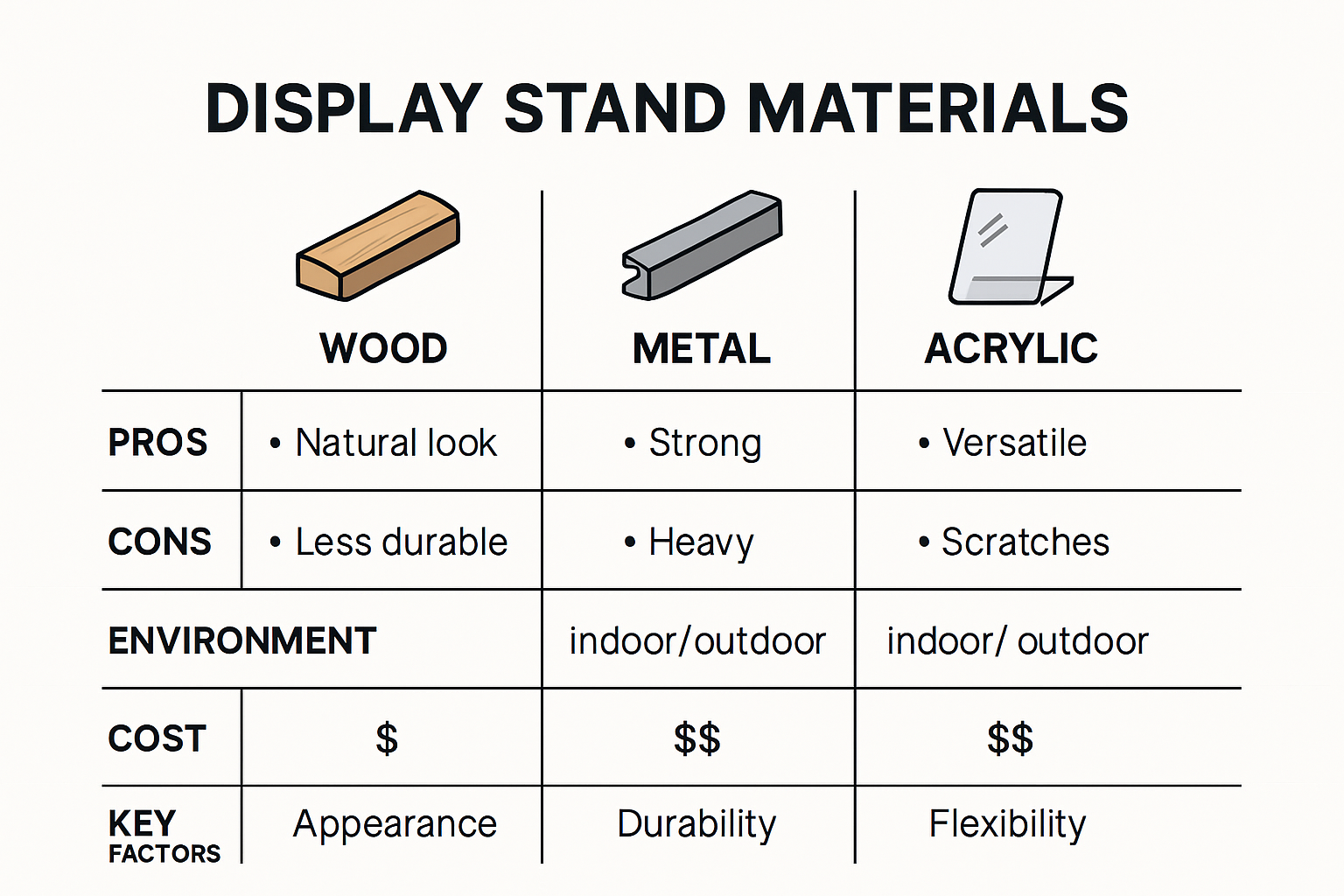
Ultimately, the perfect display stand material depends on your unique project specifications. Take time to assess your needs, experiment with sample materials, and consider consulting with crafting professionals who can provide personalized guidance for your specific display stand project.
Step-by-Step Guide to Building a Sturdy Stand
Building a sturdy display stand requires careful planning, precise measurements, and methodical execution. Whether you are creating a stand for retail, home decor, or personal projects, following a structured approach ensures a professional and reliable result.
Preparation and Planning
Before starting construction, gather all necessary tools and materials. According to cefBox’s Expert Guide, proper preparation is crucial for a smooth assembly process. Essential tools typically include:
- Measuring tape for accurate dimensions
- Saw (handsaw or power saw depending on material)
- Drill with appropriate drill bits
- Screwdriver or power screwdriver
- Sandpaper for smoothing edges
- Safety equipment like gloves and protective eyewear
Begin by creating a detailed sketch or blueprint of your display stand. Determine the exact dimensions, considering the weight and size of items you plan to display. Account for potential future needs by designing a slightly larger stand if possible.
Construction Techniques and Stability
The foundation of a sturdy display stand lies in its base and structural integrity. The Western Australian Museum’s Display manual emphasizes the importance of secure construction techniques.
Start by creating a solid base. If using wood, ensure you select pieces without warping or significant knots. Cut your base material slightly larger than the main stand to provide additional stability. Use wood glue and screws for maximum strength, avoiding reliance on a single attachment method.
When connecting different sections, use techniques that distribute weight evenly. Techniques like mortise and tenon joints, dowel connections, or metal brackets can significantly enhance structural stability. For wooden stands, consider using corner braces or triangle supports to prevent wobbling.
Finishing and Final Adjustments
After constructing the basic structure, focus on refinement and safety. Sand all edges to prevent splinters and create a smooth finish. If painting or staining, choose materials compatible with your stand’s base material and intended use.
Conduct a thorough stability test by gradually adding weight and checking for any signs of weakness. Ensure the stand can support your intended items without tilting or showing stress. For display stands in public or retail spaces, consider additional security measures like locks or anchoring systems.
Pay attention to aesthetic details. Clean up any excess glue, ensure even surfaces, and consider adding protective feet or felt pads to prevent floor scratching. A well-constructed display stand not only serves a functional purpose but also enhances the visual appeal of the items it showcases.
Below is a step-by-step process table summarizing the main tasks involved in building a sturdy display stand as detailed in the guide above.
| Step | Key Actions | Purpose |
|---|---|---|
| Preparation & Planning | Gather tools, sketch design, measure dimensions | Ensure accurate & efficient build |
| Base Construction | Select quality base material, cut to size, assemble with glue & screws | Create a stable foundation |
| Frame Assembly | Use secure joinery (brackets, dowels, etc.) | Enhance structural integrity |
| Surface Finishing | Sand edges, paint or stain, clean excess glue | Improve safety & appearance |
| Stability Testing | Add weight, check for wobbling, reinforce if needed | Confirm sturdiness & safety |
| Final Details | Install protective feet/pads, clean up, make adjustments | Add polish & protect surfaces |
Remember that practice and patience are key. Your first stand might not be perfect, but each project improves your skills. Take time to measure carefully, work methodically, and prioritize both functionality and design in your display stand creation.
Creative Design Ideas for Businesses and Homes
Display stands are more than functional structures they are opportunities for creative expression and strategic presentation. Whether for a business retail environment or home decor, innovative design can transform an ordinary display into a captivating visual experience.
Minimalist and Modern Design Approaches
Modern design emphasizes simplicity and clean lines. According to Moriah Plastics, incorporating minimalist design principles can dramatically enhance display stand aesthetics. This approach focuses on reducing visual clutter and highlighting the essential elements of your display.
Consider using monochromatic color schemes or neutral tones that allow your displayed items to take center stage. Geometric shapes and asymmetrical designs can add visual interest without overwhelming the viewer. For home environments, choose stands that complement existing decor while providing functional storage and display capabilities.
Interactive and Storytelling Display Concepts
Transform your display stand from a static object to an engaging experience. The ODM Group suggests incorporating interactive elements that create memorable interactions. For businesses, this might mean adding digital touchscreens, motion sensors, or innovative lighting that draws attention to specific products.
Storytelling is a powerful design approach. Create displays that communicate a narrative about your brand or the items being showcased. Use background elements, themed decorations, or strategic lighting to evoke emotions and connect with viewers. In home settings, display stands can tell personal stories through curated collections of photographs, travel souvenirs, or family heirlooms.
Seasonal and Adaptive Design Strategies
Embrace flexibility in your display stand design by creating adaptable structures that can be easily modified. Modular stands with interchangeable components allow you to refresh your display quickly for different seasons or occasions. For retail environments, this means easy updates for holiday promotions or new product launches.
Consider incorporating natural elements to add warmth and organic appeal. Wooden stands with live edge designs, integrated plant holders, or displays that incorporate natural textures can create a more inviting and dynamic presentation. Use color schemes and decorative elements that reflect current trends while maintaining a timeless quality.
Color plays a crucial role in design psychology. Experiment with color blocking techniques or use accent colors that draw the eye to specific items. In business settings, align your color choices with brand identity. For home displays, select colors that harmonize with your existing interior design palette.
Remember that great design balances aesthetics with functionality. Your display stand should not only look impressive but also serve its practical purpose efficiently. Take time to experiment, gather feedback, and continuously refine your design approach. Whether you are creating a display for a boutique store or your living room, creativity and thoughtful design can transform an ordinary stand into an extraordinary visual statement.
Tips for Displaying Products and Organizing Spaces
Effective product display and space organization are crucial for creating functional and visually appealing environments. Whether you are managing a retail space or organizing your home, strategic placement and thoughtful design can significantly enhance both aesthetics and functionality.
Strategic Product Visibility and Placement
Product visibility plays a critical role in attracting attention and driving engagement. According to research on Retail Store Layout Optimization, strategic product placement can dramatically improve shopper interaction and overall experience. The key is to create a layout that naturally guides viewers through your display.
Start by grouping related items together, creating logical categories that help customers quickly find what they need. Use height variation to create visual interest. Place larger or more eye-catching items at eye level, with smaller complementary products on lower or higher shelves. This technique helps create a dynamic and engaging display that draws the viewer’s eye across different sections.

Creating Adaptable and Functional Spaces
Adaptability is crucial in both commercial and home environments. The Whole Building Design Guide emphasizes creating spaces that can evolve with changing needs. Design your display stands and organizational systems with flexibility in mind. Modular shelving, adjustable compartments, and multipurpose stands allow you to reconfigure spaces quickly.
Consider the flow of movement within your space. Ensure that display stands do not obstruct natural pathways or create cramped areas. In retail settings, wide aisles and clear sightlines can improve customer comfort. In home environments, organizational stands should enhance rather than disrupt the existing room layout.
User-Centered Design and Continuous Improvement
The most effective displays and organizational systems are those that prioritize user experience. The U.S. Web Design System suggests continuously listening to user feedback and adapting accordingly. This principle applies equally to physical spaces.
Regularly assess how people interact with your displays. Are customers struggling to reach certain items? Do some sections feel cluttered or confusing? Pay attention to these subtle cues and be willing to make adjustments. In home settings, involve family members in organizing decisions to ensure the system works for everyone.
Lighting can transform a display from ordinary to extraordinary. Use strategic lighting to highlight key products or create mood and depth. Soft, warm lighting can make home displays feel inviting, while brighter, more directional lighting works well in retail environments.
Maintain a sense of balance and negative space. Not every surface needs to be filled. Strategic empty areas can help important items stand out and prevent displays from feeling overwhelming. Think of your display as a visual composition where each element contributes to the overall harmony.
Remember that great organization is an ongoing process. What works today might need refinement tomorrow. Stay open to experimentation, be willing to edit and simplify, and always prioritize functionality alongside aesthetic appeal. Whether you are showcasing products in a store or creating an organized home environment, thoughtful design can transform spaces into something truly remarkable.
Frequently Asked Questions
What materials are best for creating a display stand?
Wood, metal, and acrylic are popular choices. Wood offers durability and warmth, metal provides a modern aesthetic, and acrylic allows for sleek, transparent displays. Consider the weight capacity, intended use, and aesthetics when selecting materials.
How do I ensure my display stand is stable and sturdy?
To create a stable display stand, focus on a solid base, use secure construction techniques like dowels or brackets, and make sure to test the stand’s stability with weight before finalizing it.
What are effective design strategies for display stands in retail?
Use strategic product placement by grouping related items, varying heights for visual interest, and incorporating clean, minimalist designs to enhance the shopper’s experience. Adapt your designs for seasonal changes as well.
How can I adapt my display stand for different uses or themes?
Consider using modular designs that allow for interchangeable components or adding removable decorations. This flexibility lets you refresh displays for various seasons or themes easily.
Turn Your Display Stand Vision Into a Custom Reality
Struggling to find a display stand that truly represents your style and meets your unique needs, whether at home or for your business? Learning how to build a display stand gives you creative control, but sourcing the right materials and achieving a professional finish can be overwhelming—especially if you want the perfect balance of durability and visual appeal described in our guide. Instead of settling for off-the-shelf options, why not let our team craft a solution as unique as your space?

Skip the hassle and let us at CustomCraft UA bring your vision to life. We blend modern CNC laser precision with hand-finished detail, ensuring your stand is both functional and beautiful. Tell us what you need, and we will create a custom piece to fit your space, whether you want a minimalist display or a statement for your store. Visit our main site to get started, and collaborate directly with our team to make your display stand project effortless and personal. Now is the moment to transform your ideas into a handcrafted reality—reach out and let us help you craft something extraordinary today.


